



Despite the historic rapidity of hardware innovations that visibly transformed our lives annually, this era seems to be transitioning into maturity. Notably, while the velocity of device adoption is plateauing in certain sectors, a profound transformation is unfolding beneath the surface: the rise in digital fluency among all demographic groups. Our Ipsos B&A TechScape 2025 study highlights that the proportion of adults over 65 using the internet daily is climbing, emphasising not just usage but mastery, presenting significant opportunities. As of 2025, 58% of those aged 65 and over are online more than once a day, although they show less enthusiasm for acquiring new gadgets.
Artificial Intelligence (AI) currently dominates the headlines as the prevailing buzzword, yet media portrayals often oversimplify its potential and current impact. The reality is more complex: AI is still in its nascent stages. Despite notable progress in professional services, the data indicates that the majority of businesses have yet to fully embrace AI. In Ireland, public apprehension about AI remains high, with only 22% of the population using AI tools like ChatGPT, primarily among middle-class Dubliners, Gen Z, and Millennials. This is notably lower than global levels, revealing significant nervousness towards AI.
The true challenge lies not in merely implementing AI tools, but in rethinking organisational processes, customer engagement, and core value propositions. It is imperative to understand and manage implications related to quality, bias, and the risk of yielding uninspired, ‘vanilla’ outcomes. We must ask ourselves: is this outcome acceptable?
Beyond immediate business consequences, AI’s implications stretch into broader societal realms, poised to redefine employment and reshape human cognition. Our conversations must pivot from the fear of job displacement to job augmentation, creating new roles that harness critical human abilities—such as critical thinking, creativity, and emotional intelligence. Meanwhile, we must remain vigilant about the risk of “cognitive offloading,” where excessive reliance on AI could diminish essential critical-thinking capacities.
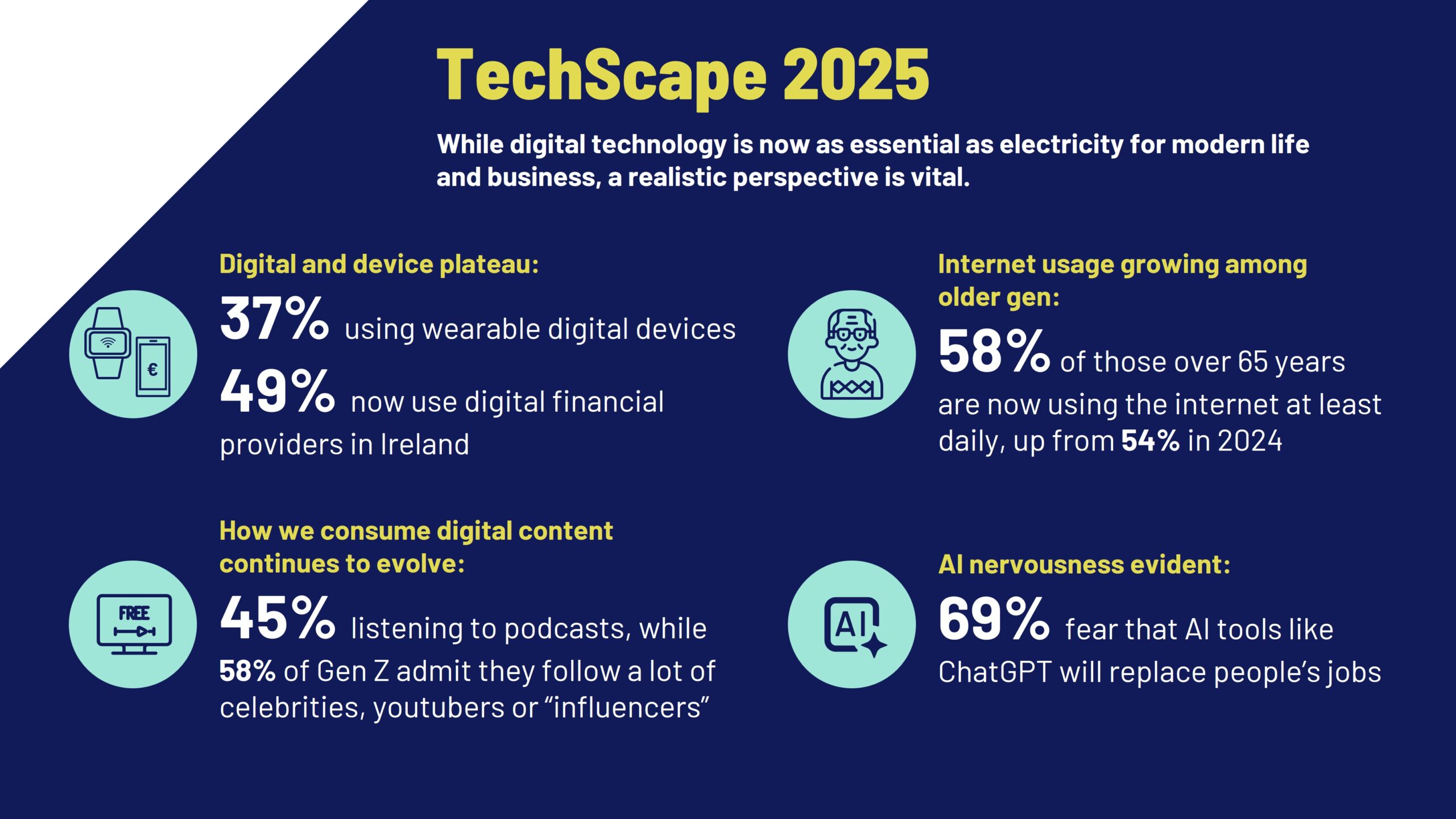
The Ipsos B&A TechScape 2025 report illustrates this is the new frontier. It demands a precise vision, a readiness to experiment and learn, and a deep commitment to bringing everyone along on this journey. The future is not something that merely happens to us; it is something that we actively construct. The task ahead is clear: we need to get to work on building a future where technology and human (HI and AI) potential advance hand in hand.
Author: Luke Reaper: luke.reaper@ipsos.com
For any enquiries or to schedule a presentation, please contact a member of our Research team or email carole.carmody@ipsos.com